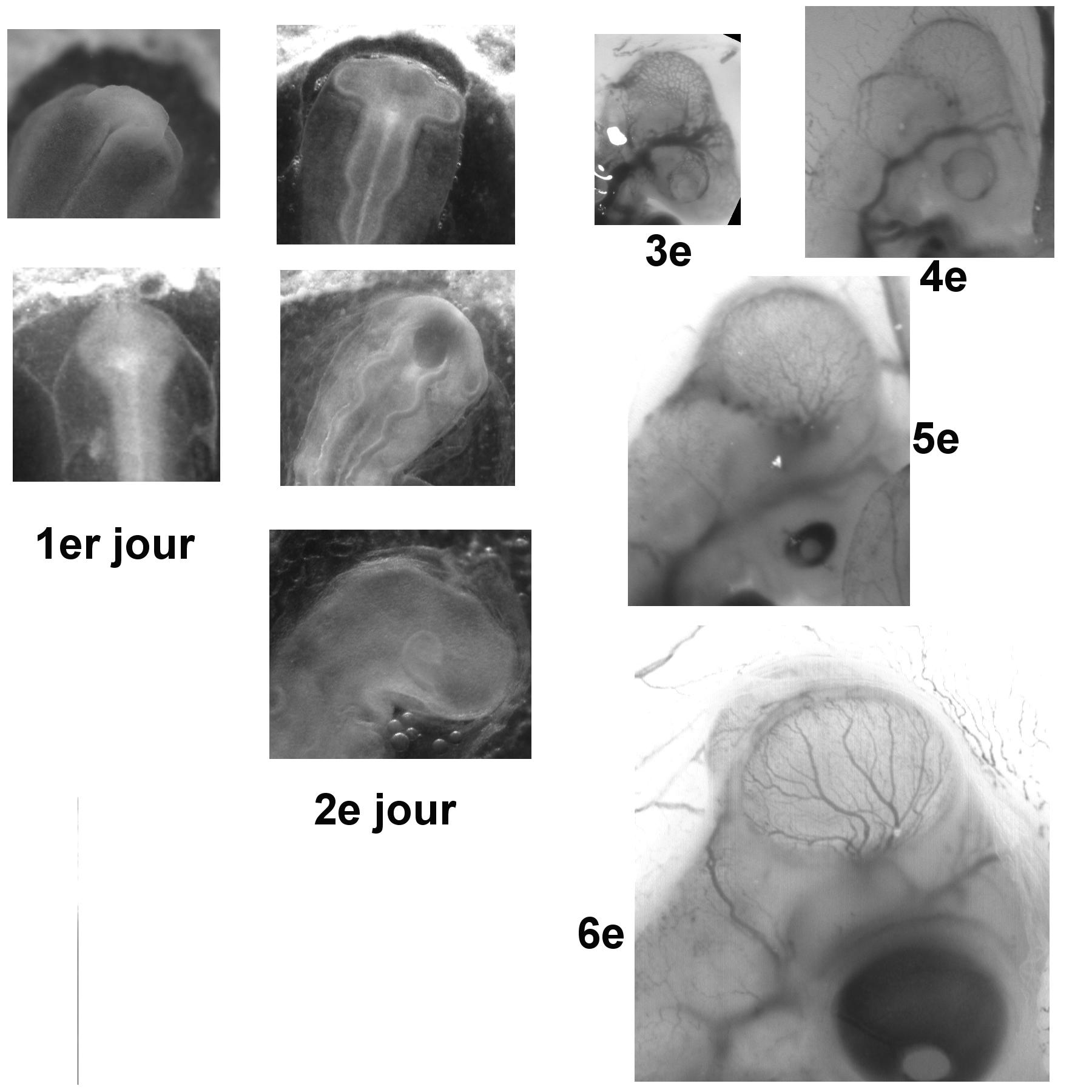
Physique de la formation de la tête : couplage entre champs de déformation et texture cellulaire. Lien avec l'évolution.
Physics of brain development. Link with evolution.
I explain here the generic vector field of head rotation
When one looks to the brain of a very young embryo, one sees that there is a kink in the region of the neck, and in between each boundary of the 3 brain vesicles. This comes from the fact that during gastrulation, the folds of the tissue form a U-run in the head region. And then the neural fold itself undergoes a moderate segmentation (unlike vertebrae, precisely because the neural folds are open. Along the backbone, the segmentation generates true segments, because the folds are stuck onto each other. I am not sure this was clear, but I hope you can follow).
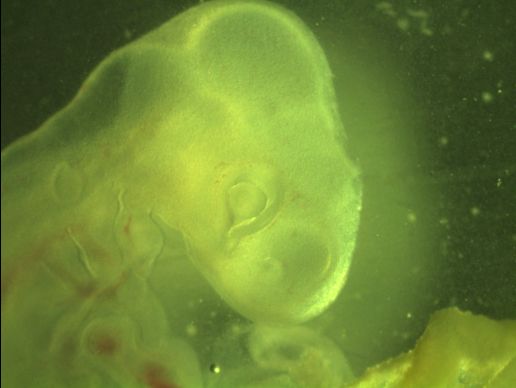
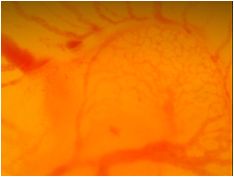
The early brain folds form a large U -Turn in the area of the head.
This is why, the neck is "closed" and forms a "brainfold", with a kink in the area of the neck (that we know all too well on our own body). (SEM image from Meier and Packard, 1984).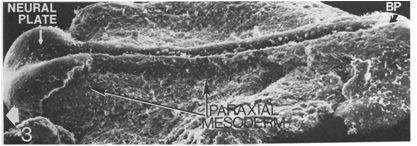
Now, between a small early brain, and a somewhat later brain (about 4 days later) One notices a winding of the tissue around the neck-kink (closure of the notopore). Around this point, the tissue undergoes what is called a torque.This is quite visible in the path taken by blood vessels
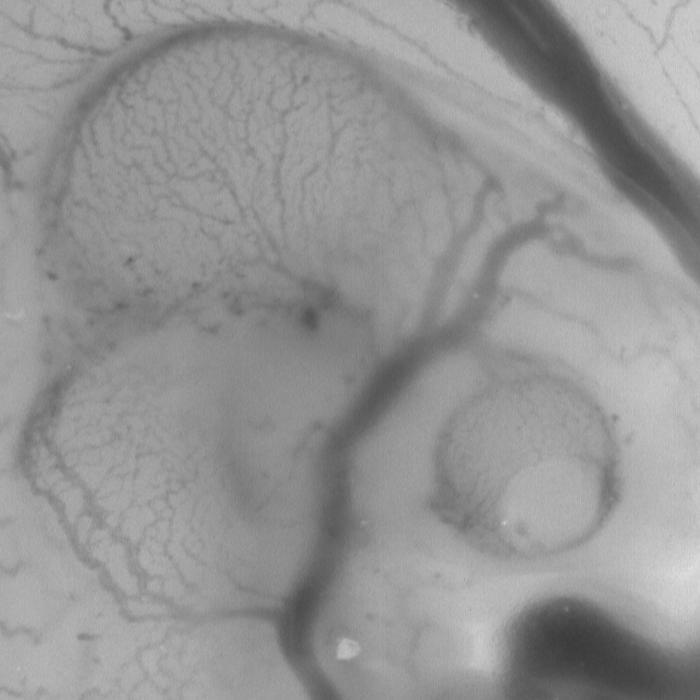
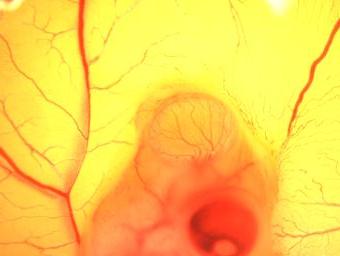
If we rescale two images of developping brains, at a late stage and an earlier stage, we see that it is not a mere inflation : the angle in the area of the neck (closure of the notopore) increases, as a consequence of brain vesicle inflation
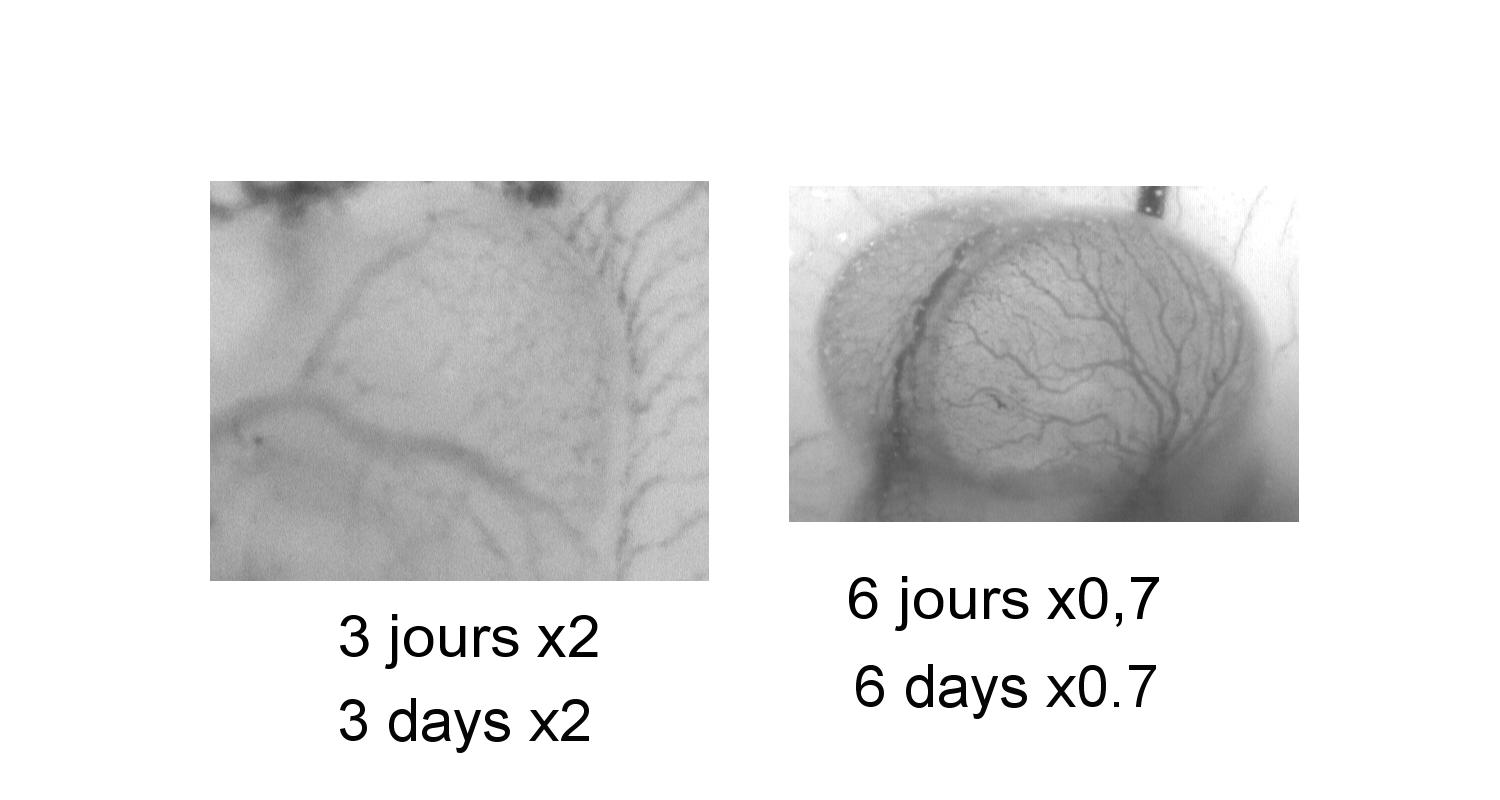
A series of images showing different stages of brain development, starting from a mere fold and ending in a well developped head. These images correspond to about five days of development in a chick