Physics of vortices in embryos. Experimental evidence and models.
|
Physics of vortices in embryos. Experimental evidence and models. |
|||
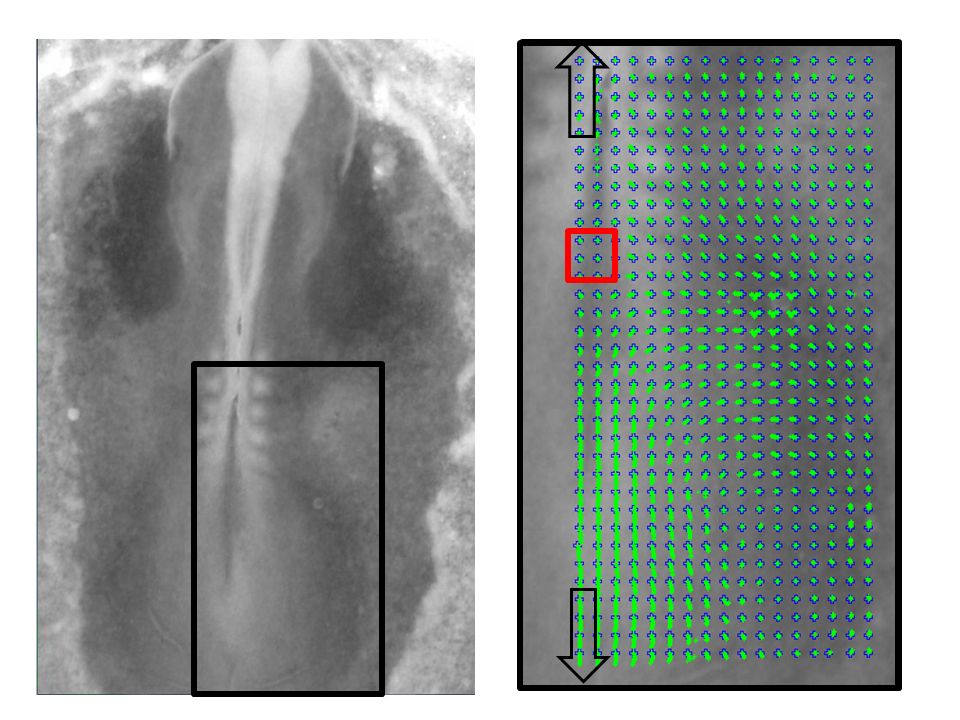
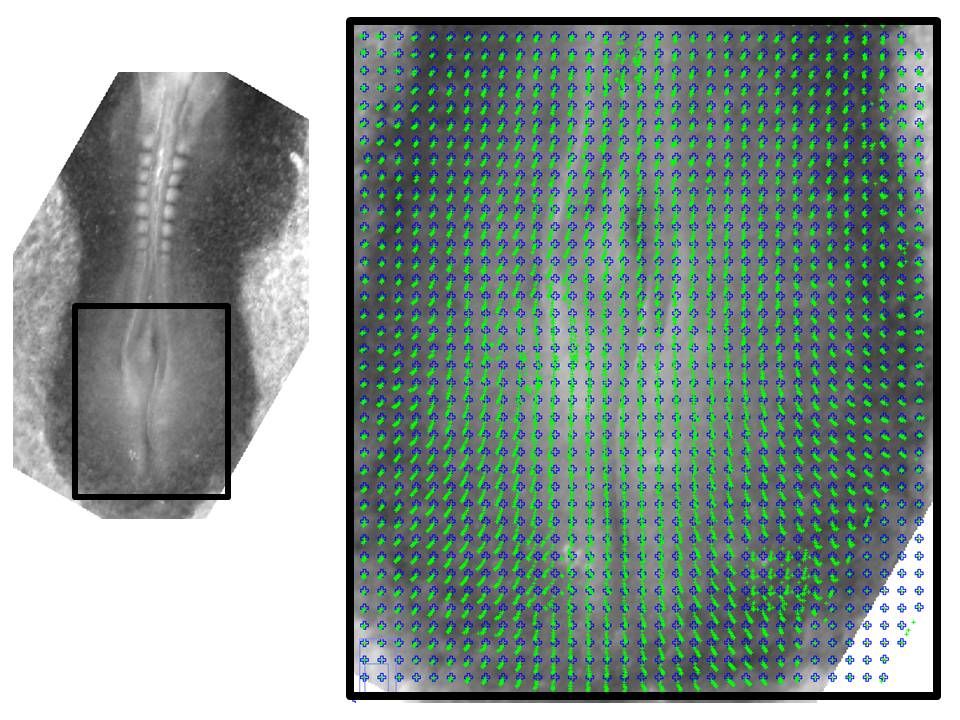
| Vortex at the 5 pairs of somites stage. The head is well visible (top). The (future) umbilical area is the narrow area in the middle. | |
||
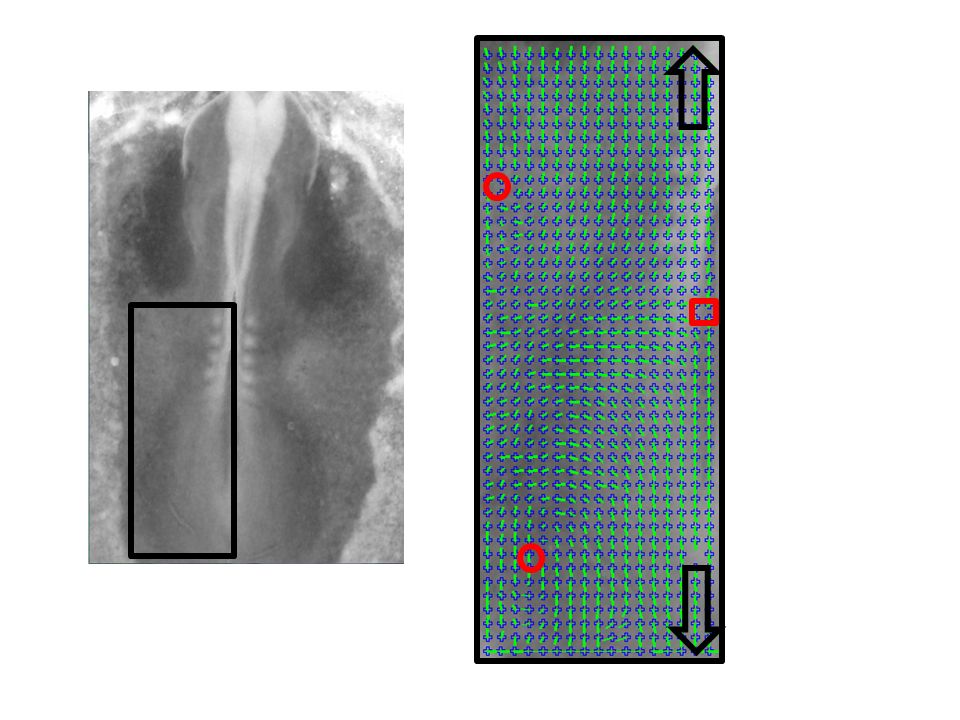
| The same vortex, with only the tangent vectors shown. | |
||
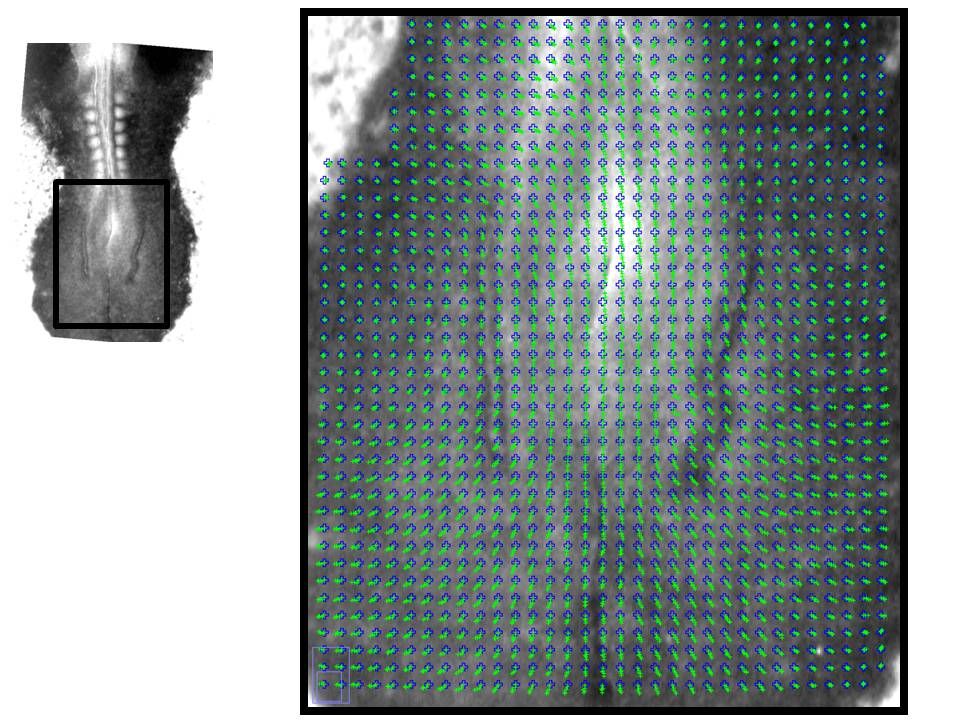
| Continuation of body formation. The pair of pelvic vortices move posteriorily and wind the tissue laterally. | |
||
| The same vortices with only the tangent vectors shown. | |
||
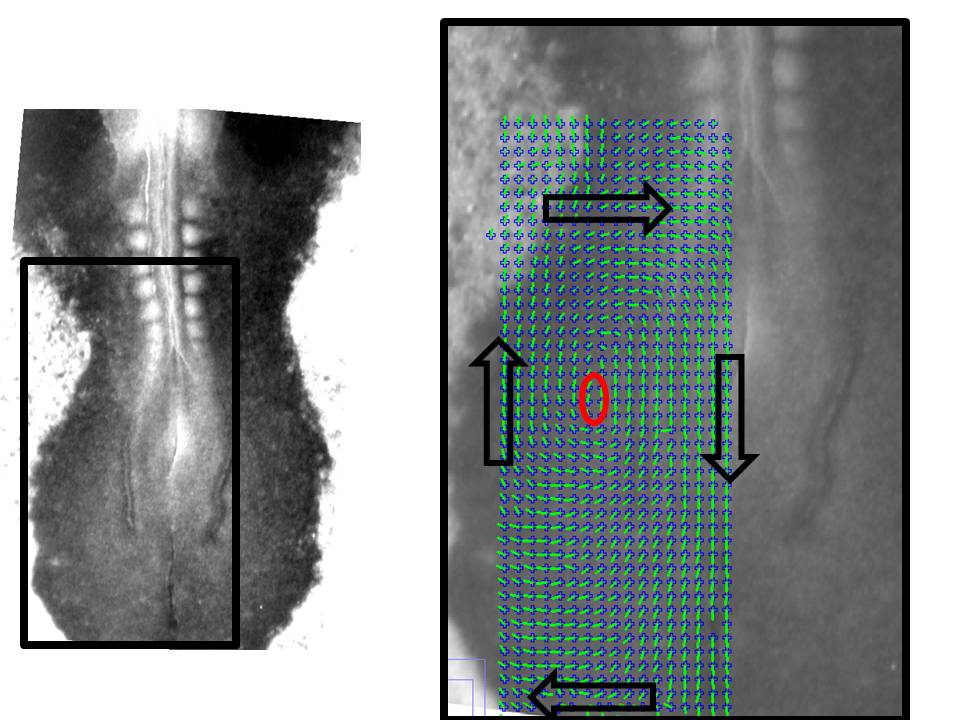
| The mechanism is stabilized, the winding continues along the body axis, following "one degree of freedom" only. The sacrum and pelvis form. | |
||
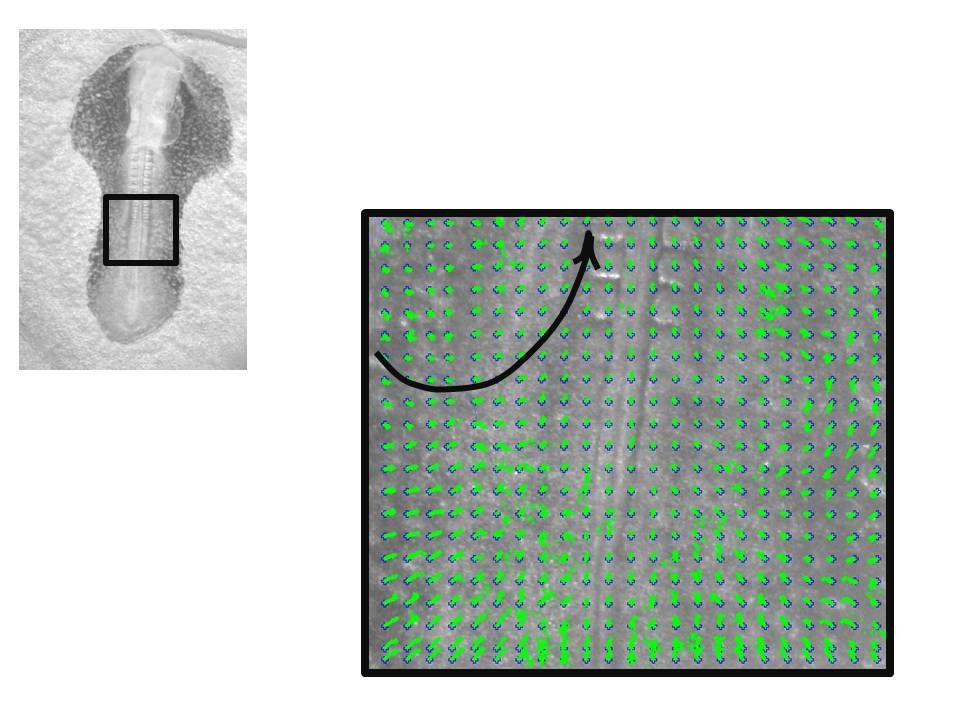
| The typical embryo is recognizable, it is now more 3D, and dense optically. Still, a rotation is observed towards the rostral area, in this image. | |
||
| Continuation of "vortex" presentation | See more explanations | ||
| The quotation of the page : "When atoms move straight down through the void by their own weight, they deflect a bit in space at a quite uncertain time and in uncertain places, just enough that you could say that their motion has changed. But if they were not in the habit of swerving, they would all fall straight down through the depths of the void, like drops of rain, and no collision would occur, nor would any blow be produced among the atoms. In that case, nature would never have produced anything", Lucrèce. | |||
| Retour à la page de présentation-Back to front page | |||